

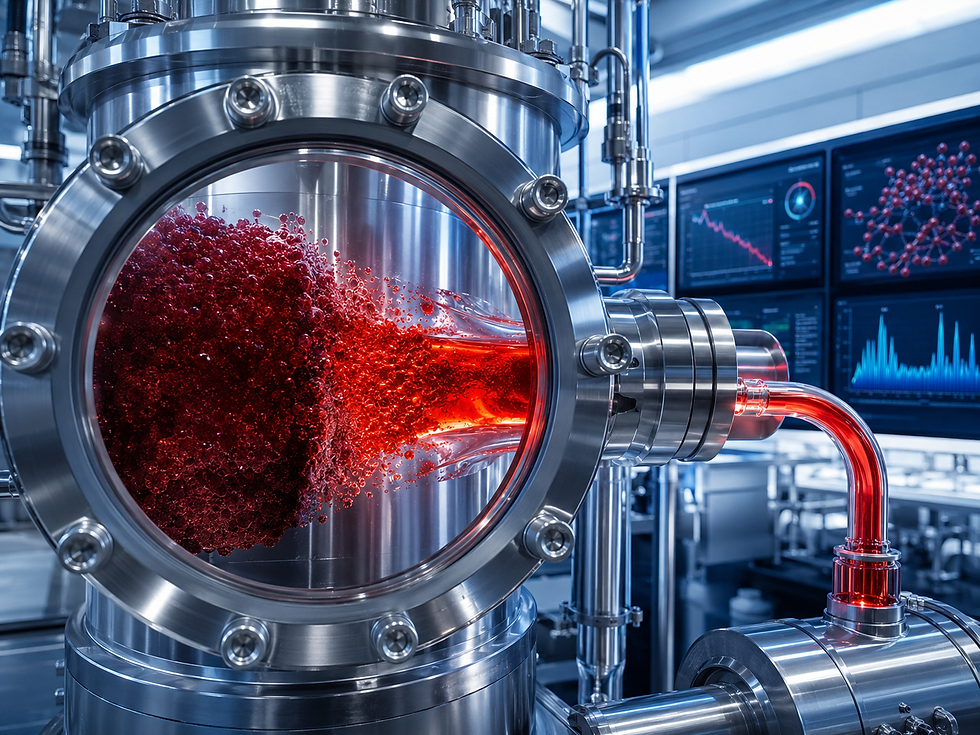
What Is Astaxanthin?
Astaxanthin is a naturally occurring red-orange pigment in the carotenoid family. Certain microalgae produce and accumulate it, contributing to their characteristic colour.
Laboratory studies using model membranes have reported that astaxanthin reduces lipid peroxidation, the oxidative damage of membrane lipids. Researchers examine how its molecular structure contributes to radical trapping at membrane surfaces and within the lipid layer.
These findings provide a basis for studying astaxanthin in relation to oxidative stress and membrane biology, and inform its selection for the NovaStemix® formula.
Ingredient Form &
Specification

NovaStemix® uses a microencapsulated astaxanthin preparation. Its raw material specification describes the astaxanthin content and microencapsulation characteristics.
We consider the ingredient’s form, specification and daily amount alongside the other components of the complete 12-ingredient formula.
The Science Behind
Membrane Research
Experiments using model membranes examine how astaxanthin traps free radicals at membrane surfaces and within the lipid layer. These studies inform research on lipid peroxidation and oxidative stress.
Human Research
A 12-week randomised trial in 30 adults reported lower levels of a lipid oxidation marker in red blood cells with astaxanthin than with placebo. These findings concern specific blood biomarkers.
Formulation Context
Preparation, dose, study duration and measured outcomes matter when interpreting findings. We consider these factors alongside the microencapsulated astaxanthin ingredient used within the complete NovaStemix® formula.
Why It Is Included in NovaStemix®
Astaxanthin brings a focus on membrane lipids to our formulation approach. Experimental studies examine how it interacts with free radicals and influences lipid peroxidation in model membranes.
This research profile is considered alongside coenzyme Q10’s role in mitochondrial electron transport and PQQ’s experimental research on mitochondrial biogenesis. These different areas provide a scientific rationale for considering the ingredients together within the formula.
NovaStemix® uses a microencapsulated astaxanthin preparation. We consider its form, specification and daily amount as part of the complete 12-ingredient formula.
Research Areas
Selected areas of experimental astaxanthin research that inform our formulation approach.
EXPERIMENTAL RESEARCH
Membrane Interactions
EXPERIMENTAL RESEARCH
Lipid Peroxidation
EXPERIMENTAL RESEARCH
UV Stress Responses
EXPERIMENTAL RESEARCH
Inflammatory Responses


