
Stem Cell Exhaustion
Understanding how weakening regeneration drives the biology of ageing
Stem cell exhaustion marks the progressive loss of cellular potential to sustain tissue health, drive rejuvenation, and fix damaged zones. As this vitality fades, bodily systems lose their agility, becoming more vulnerable to external stress and taking much longer to heal after an injury.

What is Stem Cell Depletion?
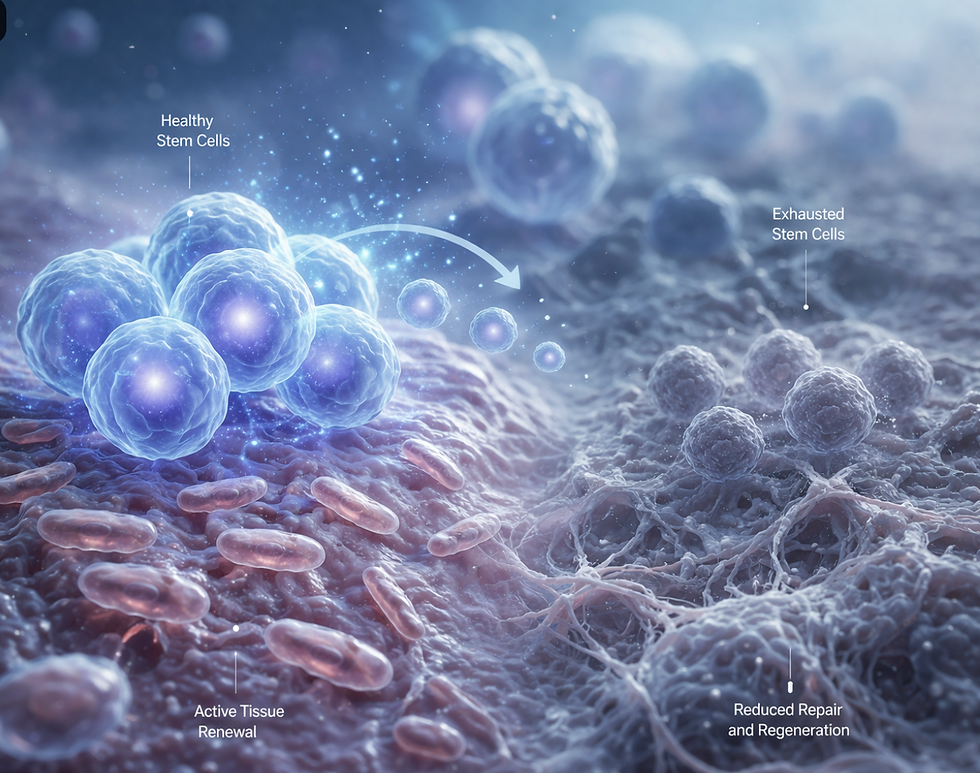
This state describes when vital stem cells lose their power to duplicate themselves, retain their unique traits, or create the specific functional cells necessary for keeping our tissues robust and healthy.
Since these cells serve as essential pools for replenishment, even minor drops in their performance can trigger a cascade of issues for physical resilience during ageing.
Why is this vital for ageing?
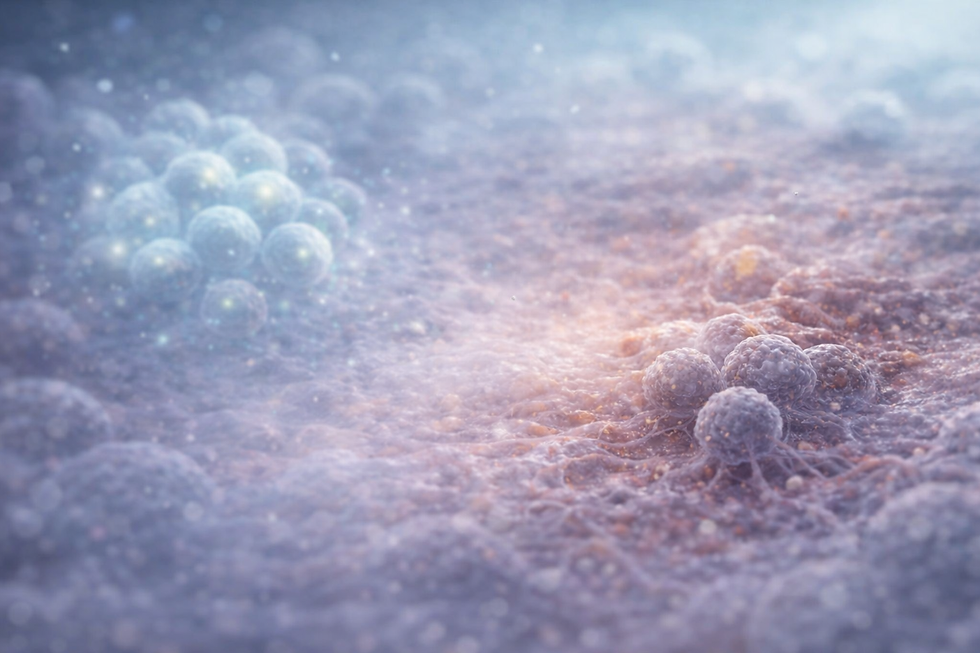
Cellular function is crucial because our tissues depend on local stem cells to swap out old cells, fix acute damage, and keep biological systems level. When this potential drops, healing lags and systemic strength may erode. Ageing, therefore, is not just about the buildup of damage, but is also defined by a fading internal ability to reconstruct and restore what has been lost over the years.
What triggers this loss of regeneration?
This exhaustion isn't caused by just one factor. It is the result of internal stress, changes in the local environment, and a naturally diminishing capacity to renew through the years.

Fading Self-Renewal Power
Cells may lose the agility to keep their own population stable via balanced and ongoing replication.

Shifts in the Niche Environment
The surrounding cellular landscape can turn hostile, failing to support proper cell maintenance and growth.

Stress From Constant Loading
Cumulative damage and metabolic strain can slowly drain the fitness and regenerative output of your stem cells.
Tracing the Cellular Impact
This depletion isn't localized to just one area. As your internal reserves drop, tissues lose their natural flexibility, recovery times jump, and the delicate dance between daily wear and repair becomes off-balance. This helps explain why fading stem cell health can impact the strength and performance of various organs and complex systems as we move through the ageing process.
Senescence of Cells
How does it relate to other hallmarks?
Stem cell exhaustion never happens alone. It is deeply tied to genetic instability, telomere shortening, cellular ageing, and power failure in the mitochondria, while a drop in repair capacity can make these other problems much worse. This cross-influence is why the hallmarks of ageing are viewed as a complex web of events that all affect one another throughout the entire human biological experience.
Stem Cell Exhaustion
Genomic Instability
Telomere Attrition
Mitochondrial Deficiency
Why focus on this for healthy longevity?
Ageing well depends on the body's talent for renewal, restoration, and adapting to changes. Stem cells are at the core of the biological savings account that funds these vital actions. Grasping how these cells tire out helps us move past basic aesthetic treatments toward a serious focus on deep tissue integrity, long-term vitality, and maintaining a healthy regenerative equilibrium.
How does NovaStemix approach this?
At NovaStemix, we view healthy ageing through a sophisticated lens. Our mission is to look beyond single solutions to recognize that true vitality relies on many systems working in harmony. The science of stem cell exhaustion shows exactly why precision ingredients and a multi-pathway strategy are essential for anyone serious about a comprehensive healthy-ageing plan.
